
Ap Chundu's Lhapsoel
Description
Season: 1st November
Location: Haa Valley
Ap Chundu’s Lhapsoel is an age-old spiritual tradition of Haa Dzongkhag (district), observed every year on 1st November in honour of Ap Chundu, the revered principal protective deity of the district.
Ap Chundu, regarded as the guardian of Haa, is believed to safeguard the land and its people from misfortune, ensuring peace, prosperity, and harmony throughout the year.
The sacred celebrations begin in the early hours of the morning (around 4:45 am) at the historic Lhakhang Karpo. Traditional rituals of Lhabsang and Thruesoel are performed to purify and bless the Chip (the sacred riding horse of Ap Chundu). A ceremonial gunshot signals the symbolic arrival of the deity, marking the start of a deeply spiritual journey.
Following the rituals, a grand Chipdrel (ceremonial procession) sets out towards Jyenkakha, located approximately 9.6 km from Lhakhang Karpo. This is considered one of the longest ceremonial processions in Bhutan, offering visitors a rare opportunity to witness living spiritual heritage in motion.
The procession makes 8–10 meaningful stopovers, beginning at the historic Wangchuck Lo-Dzong, where locals and institutions offer Suja and Dresi as acts of devotion. Each halt reflects the strong community participation and collective reverence surrounding the event.
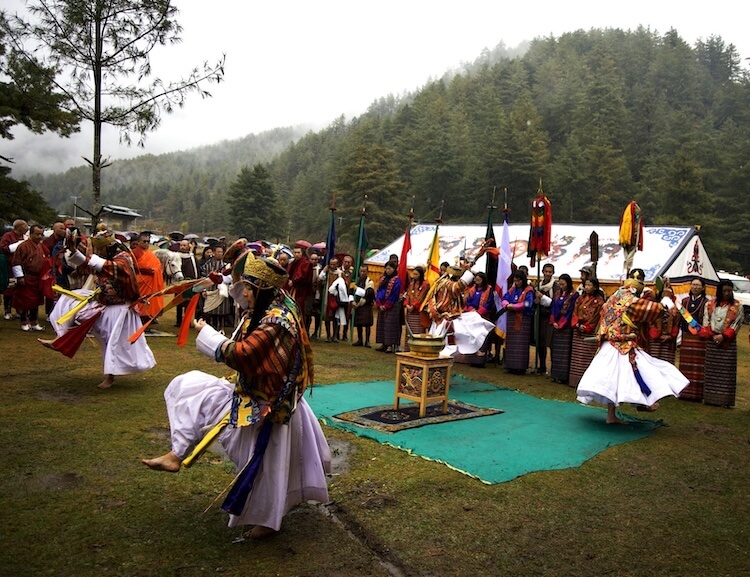
Upon reaching Jyenkakha, prayers are offered at the altar, followed by the reading of the Kasho (royal decree) by the Venerable Lam Neten, reaffirming the significance of the festival and conveying important messages. The celebrations then continue with powerful ritual performances by Pawo and Paazaps (warrior), culminating in the dramatic erection of Ap Chundu’s flag atop a towering tree—estimated to stand over 77 feet high.
The day unfolds further with vibrant performances by Dzongkhag cultural dancers, followed by a communal lunch shared by all participants.
Beyond its spiritual importance, Ap Chundu’s Lhapsoel is a joyful social gathering—a time when families, friends, and communities reunite. For visitors, it offers an authentic and immersive glimpse into Bhutan’s living traditions, deep-rooted faith, and warm communal spirit.